Is listening to an audiobook the same as reading? What the research says
What the studies on comprehension, memory and brain scans show, where each one falls short, and when the printed page still helps.
The short answer
For most adults reading a straightforward book, the research finds little or no difference in how much you understand: a 2016 study of 91 adults found no difference between listening, reading and both, and a 2022 review of 46 studies found no significant overall difference. Brain scans show the meaning of words lands in the same places either way.
The differences show up at the edges: listeners’ minds wander more, people remember less from audio-only lessons, and readers gain an edge when they can slow down and go back. That is why the answer depends on the book, which is what each verdict on this site measures, using the same thirteen checks every time.
Is listening to an audiobook cheating?
No, not for adults. Virginia Clinton-Lisell, who wrote the 2022 review of 46 studies, put it plainly: “It is not at all cheating to listen as opposed to read” (Tech & Learning, 21 March 2022). Daniel Willingham of the University of Virginia wrote in the New York Times in December 2018 that “each is best suited to different purposes, and neither is superior” (APS, Members in the Media).
The idea is still common. An NPR/Ipsos poll reported in July 2025 found that about 40% of American adults said listening to audiobooks is not a form of reading (NPR, 7 July 2025). Beth Rogowsky, who led the 2016 study, told TIME that before her study found no difference, “I was a fan of audiobooks, but I always viewed them as cheating” (TIME, 6 September 2018).
The exception is children learning to read. Rogowsky told NPR: “When you are learning to read, you really need to have the experience reading.”
What the comprehension studies found
Rogowsky, Calhoun and Tallal (2016). 91 adults took in the preface and one chapter of a non-fiction book as an audiobook, as e-text on a tablet, or both at once. “No statistically significant differences were found” on a written test straight after, or again two weeks later. Limits: one short extract of one book, adults only, and the reading was on a tablet rather than paper.
Clinton-Lisell (2022), a review of 46 studies. The studies ran from 1955 to 2020 and covered 4,687 people. There was no significant overall difference in comprehension, but readers who could set their own pace and go back had a small advantage. No study gave listeners the same control (Tech & Learning, 21 March 2022). When listeners could not control the pace, they made fewer inferences, while literal understanding was about the same (Cornell Bronfenbrenner Center, Psychology Today, 7 May 2026). Limits: only competent readers were included, and the listening conditions did not allow pausing or rewinding, unlike a modern audiobook app.
Clinton-Lisell (2023), on reading while listening. A review of 30 studies found “a trivial overall benefit of reading while listening over reading only”, and only when the experimenter set the pace. When people read at their own pace, there were “no reliable effects”. Limits: the results varied a great deal between studies.
What happens in the brain
Deniz and colleagues (2019). Nine adults heard and read the same ten stories from The Moth Radio Hour in a brain scanner. The maps of word meaning were nearly the same for both: “the representation of language semantics is independent of the sensory modality.” Limits: nine people, two of them authors of the paper; no test of understanding; and the reading was one word at a time at speaking speed, which the authors say “is different than natural reading.”
Chen and colleagues (2024), from the same lab, found that “the timescale of representation is organized similarly for the two modalities.” Limits: brain imaging only.
These studies show where meaning is processed. They do not show how well people understood or remembered what they heard or read.
Where listening falls behind
Minds wander more. In Varao Sousa, Carriere and Smilek (2013), 211 students took in three excerpts of about 1,800 words from Bill Bryson’s A Short History of Nearly Everything, with listeners hearing Bryson’s own recording. Minds wandered most when listening, about half the times students were asked, against about a third for silent reading, and listeners remembered less on a true or false test. Limits: students at one university, one book, short excerpts, and listeners looked at a blank screen. The authors call it exploratory.
Audio-only lessons are remembered less. In Daniel and Woody (2010), students given a lesson as a podcast scored on average 28% lower on a quiz than students who read it, “about the difference between an A or a D grade”, as David Daniel told TIME, 6 September 2018. Limits: classroom study material, not a book read for pleasure, and the number of students is not in the report.
Readers can go back. The 2022 review found the reading edge appears when readers can slow down and reread. Willingham told WPR that “difficult texts demand additional mental strategies” and “Print makes those strategies easier to use” (WPR, 25 January 2019).
What screen-versus-paper research does not tell you
Studies of screens and paper are often quoted in this debate, but they are not about audio. Clinton (2019), via Reading Rockets found reading from screens worse than paper for expository texts, with no difference for narrative texts, and readers judged their own performance more accurately on paper. Singer and Alexander (2017), via the University of Maryland found students preferred screens and thought they did better on them, but did better on paper.
Both compare screens with paper, not listening with reading. For this site, they matter only where a book depends on its layout.
Can you listen at 2x and still understand?
No study found tests audiobooks at speed. The closest is Murphy and colleagues (2022): 231 undergraduates watched lecture videos at 1x, 1.5x, 2x or 2.5x. There were “minimal costs” up to 2x, “but performance declined beyond 2x speed”, both straight after and a week later. Limits: two lecture videos of about 13 and 14 minutes, not hours of narration, and no pausing or notes were allowed.
That finding may not carry over to a long novel with many characters, so treat 2x on a long, complex book with care.
Why the answer depends on the book: how our checks use this research
The research says the meaning gets through either way for a plain text. So instead of asking which format is better in general, each verdict on this site looks for the specific features that make one format harder or easier for one book. The thirteen checks are the site’s own rules, informed by this research; no study tested them as a formula. How we decide sets out every check and its points.
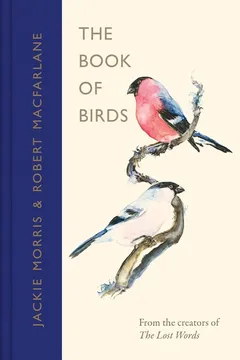
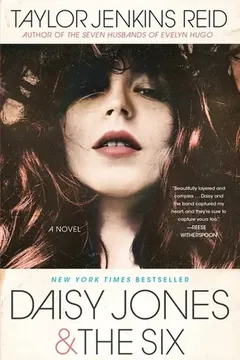
So a full cast recording such as Daisy Jones & The Six scores for listening, and a book whose pages are full of pictures, such as The Book of Birds, scores for reading.
| Check | Favours | What the research says | Example verdict |
|---|---|---|---|
| Jumping timelines (8 points) | Reading | Readers gain when they can slow down and go back (Clinton-Lisell 2022); print helps with the strategies difficult texts need (Willingham 2019). | The Seven Husbands of Evelyn Hugo Read |
| Three or more points of view, one narrator (8 points) | Reading | Keeping track is harder without the ability to look back (Clinton-Lisell 2022, on control of pace). | A Game of Thrones Read |
| Story depends on images or layout (9 points) | Reading | Screen-versus-paper research shows the medium matters for some texts (Clinton 2019). No audio study covers pictures, because audio has none. | The Book of Birds Read |
| Many similar-sounding names (8 points) | Reading | Minds wander more when listening (Varao Sousa and colleagues 2013), and a missed name cannot be glanced back at. | Wuthering Heights Read |
| Literary or dense prose (7 points) | Reading | “Difficult texts demand additional mental strategies” (Willingham 2019); listeners made fewer inferences when they could not control the pace (Clinton-Lisell 2022, as summarised by Cornell). | A Little Life Read |
| Narration criticised (5 points) | Reading | Interest and attention drop together when listening: mind wandering and interest were linked most strongly for listeners (Varao Sousa and colleagues 2013). | Mexican Gothic Listen |
| Maps, family trees or footnotes (3 points) | Reading | The same as layout. It does not count when the audiobook comes with a PDF of them. | The Hobbit Read |
| Full cast or produced audio (10 points) | Listening | A narrator adds something of their own: “they’re adding their interpretation to the author’s words” (Willingham 2019). | Daisy Jones & The Six Listen |
| Read by the author (memoir only) (8 points) | Listening | Word meaning reaches the same parts of the brain either way (Deniz and colleagues 2019), so the recording can add the author’s own voice without losing the meaning. | Swan Song Listen |
| Single point of view and narrator (7 points) | Listening | With one voice and one point of view there is little to keep track of, which is where comprehension matched (Rogowsky and colleagues 2016). | Project Hail Mary Listen |
| Award-winning or praised narration (6 points) | Listening | The quality of the narration is part of listening that the studies did not measure, so the site relies on named critics and awards. | Pride and Prejudice Listen |
| Unfamiliar names or dialect (3 points) | Listening | Hearing names and accents said aloud removes the decoding work: audiobooks “allow listeners to get the meaning while skirting the work of decoding” (Willingham, New York Times, 2018). | The Hate U Give Listen |
| Long book (3 points) | Listening | Practical, not from a study: Virginia Clinton-Lisell has said audiobooks can help people with long commutes or household duties (Tech & Learning, 2022). | Sapiens Listen |
Each example page scores the check named. Verdicts are rechecked annually, so an example can change.
Key findings at a glance
| Study | Year | Sample | Finding | Limit | Link |
|---|---|---|---|---|---|
| Rogowsky, Calhoun and Tallal, SAGE Open | 2016 | 91 adults | No significant difference in comprehension between listening, reading and both, straight after or two weeks later | One short non-fiction extract; tablet, not paper | Source |
| Clinton-Lisell, Review of Educational Research | 2022 | 46 studies, 4,687 people | No significant overall difference; small reading advantage when readers control the pace | Listeners could not pause or rewind; competent readers only | Source |
| Clinton-Lisell, Educational Research: Theory and Practice | 2023 | 30 studies, 1,945 people | Reading while listening gave a trivial benefit, only when the pace was set for the reader | High variation between studies | Source |
| Deniz, Nunez-Elizalde, Huth and Gallant, Journal of Neuroscience | 2019 | 9 adults | Maps of word meaning in the brain nearly the same for listening and reading | Nine people, two of them authors; no comprehension test; word-by-word reading | Source |
| Chen and colleagues, Communications Biology | 2024 | Not confirmed | Timescales of language processing organised the same way for both | Brain imaging only | Source |
| Varao Sousa, Carriere and Smilek, Frontiers in Psychology | 2013 | 211 students | More mind wandering and worse memory when listening than when reading | One university; three short excerpts of one book | Source |
| Daniel and Woody, Teaching of Psychology | 2010 | Students (number not confirmed) | Podcast group scored 28% lower on a quiz than readers | Classroom lesson, not a book; reported via TIME | Source |
| Clinton, Journal of Research in Reading | 2019 | Not confirmed | Screens worse than paper for expository texts, no difference for narrative | Screens and paper, not audio | Source |
| Singer and Alexander (review and experiments) | 2017 | 36 studies reviewed | Students preferred screens and thought they did better, but did better on paper | Screens and paper, not audio | Source |
| Murphy, Hoover, Agadzhanyan, Kuehn and Castel, Applied Cognitive Psychology | 2022 | 231 undergraduates (first experiment) | Little or no cost up to 2x speed; worse at 2.5x | Short lecture videos, not audiobooks | Source |
The 2022 review’s findings are as reported by Tech & Learning (21 March 2022) and the Cornell Bronfenbrenner Center (7 May 2026); its abstract could not be opened, so no effect size is given. Sources checked 2 November 2026.
Choosing for one book? Search the verdicts, or browse the best on audio shelf and the best on the page shelf. For non-fiction to try, see the best non-fiction audiobooks; for recordings with a cast, the best full cast audiobooks; and for what each service costs, Audible vs Kindle.
Questions people ask
Is listening to audiobooks cheating?
No, for adults. The largest review, of 46 studies, found no significant overall difference in comprehension, and its author said: "It is not at all cheating to listen as opposed to read." Children learning to read still need to practise reading.
Does an audiobook count as reading for a book club or a Goodreads challenge?
There is no official rule. Book clubs set their own, and most want members to have taken in the whole book, which an unabridged audiobook does; an abridged recording is not the whole book. No official Goodreads statement was found; members of the Reading Challenge discussion group say audiobooks count, with a few dissenting.
Which is better for retention, reading or listening?
For short, plain texts, the studies find little difference, including after two weeks (Rogowsky and colleagues 2016). Where there is a gap it favours reading: listeners' minds wandered more and they remembered less in a 2013 study, and students scored lower after an audio-only lesson in a 2010 study.
Can you listen at 2x and still understand?
No study has tested audiobooks at speed. A 2022 study of lecture videos found little or no loss up to 2x and a drop at 2.5x. That was for short videos, so treat 2x on a long, complex book with care.
Is reading along while listening better?
Only slightly, and only when someone else sets the pace: a 2023 review of 30 studies found "a trivial overall benefit".
Is listening the same for the brain?
For word meaning, nearly: a 2019 brain imaging study of nine people found the same areas respond whichever way the story arrives. It did not test understanding.
So why does Read vs Listen give some books a Read verdict?
Because the gaps the research finds, such as looking back, pace, layout and attention, matter more in some books than others. How we decide sets out the thirteen checks.
More guides

How we decide
Every check behind every verdict, with its points.
The best non-fiction audiobooks
Memoir, history, true crime, science and nature, ranked.
The best full cast audiobooks
Recordings with a cast or sound design, ranked.

Audible vs Kindle
Which one for which book, and what each costs.
Spotted an out-of-date length or price? Tell us. Buy buttons go to Amazon UK or US; how we handle affiliate links.